Sarandë — a complete guide to the Riviera's southern gate
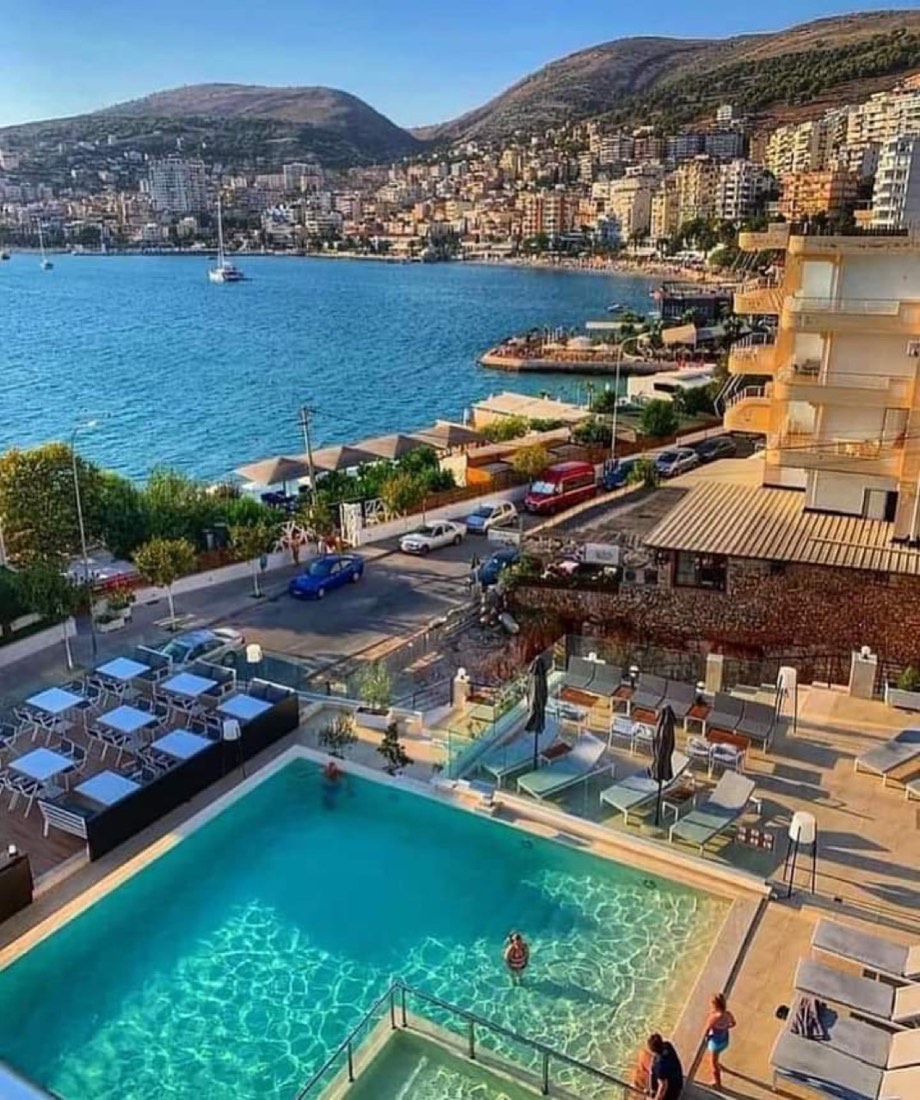
Sarandë is the southern gateway of the Albanian Riviera — a horseshoe of pastel buildings facing Corfu across a strip of water you can almost swim. Here's how to spend three or four days here without missing the things that matter.
 Tony Denesa·Senior Travel EditorMarch 3, 2026· 9 min
A horseshoe town on the Ionian
The ferry from Corfu pulls into Sarandë at sunset and the whole town turns gold. From the deck you see the curve of the bay — a perfect crescent of pastel apartments stacked up the hillside, the long promenade lined with palm trees, and behind it all the dry, scrubby hills of southern Albania. It is a small city by mainland standards (about 40,000 people in winter, four times that in August) but it punches above its weight: it is the southern hub of the Albanian Riviera, the easiest access point to Butrint, Ksamil and the Blue Eye, and the first place most international visitors set foot in the country.
Sarandë is also a city in transition. Twenty years ago it was a sleepy fishing port. Today there are construction cranes on every other block, new boutique hotels opening monthly, and a confidence in the air that does not quite hide the fact that the place is still finding itself. That is part of its charm. Come now, before the cranes finish.
This guide covers everything you need for three to four days here — including the day trips that make the trip.
What to do in town
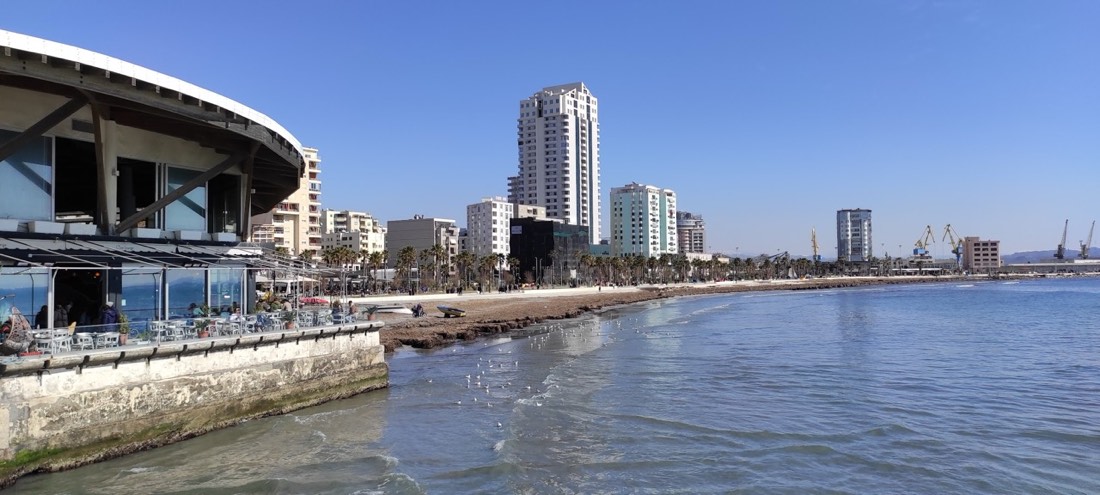
The Lungomare promenade is the spine of Sarandë and where you will spend most evenings. Two and a half kilometres long, it runs from the port at the north end past the central beach (which is decent but small and crowded) all the way to the modern marina at the south. Walk it once at sunset with an ice cream and you will understand the city; walk it twice and you will start recognising the regulars.
The Synagogue ruins, in the centre of town tucked between modern blocks, are one of Sarandë's most under-visited surprises — a fifth-century Jewish basilica with extraordinary mosaics, only excavated in the last few decades. Entry is symbolic and you will probably have it to yourself. The Castle of Lëkurësi sits on the hill above town with the best panoramic view of the bay; you can drive or take a taxi for a few euros, and there is a restaurant at the top serving simple grilled meat and cold beer for sunset.
Mango Beach and Pasqyra Beach are within twenty minutes of town if you want clearer water than the central beach offers. Both are organised — sunbeds €10–€15 a pair — and are reachable by car or by the local furgon minibuses.
The four day trips that make the trip
This is where Sarandë earns its reputation. Four destinations within an hour or less of the city deserve a full day each.
Butrint is the most important: a UNESCO archaeological site that has been continuously inhabited since the Bronze Age, with overlapping Greek, Roman, Byzantine, Venetian and Ottoman layers. Walk the perimeter trail in three hours, see the theatre, the baptistery mosaics (covered with sand most of the year for protection), and the Lion Gate. Go early or late — midday in July is brutal.
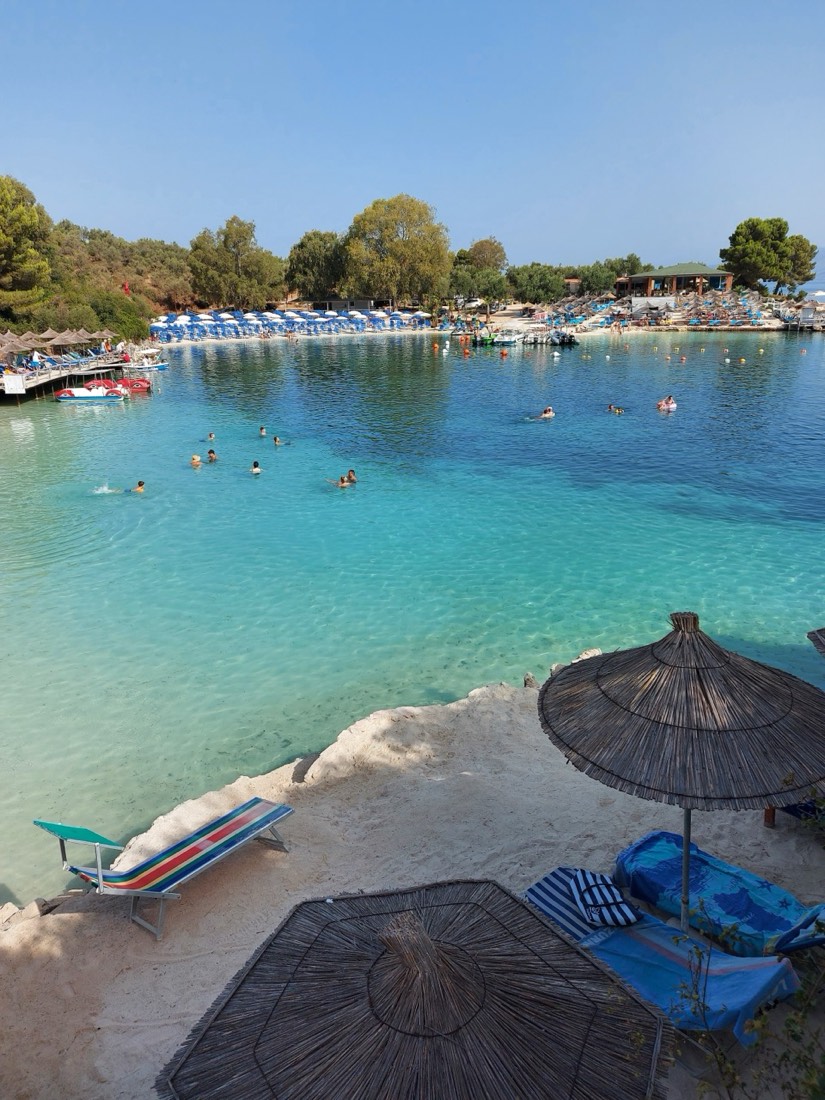
Ksamil is the famous beach village twenty minutes south. The water is genuinely Caribbean-blue and there are four small islands a hundred metres offshore that you can swim or paddle to. It is also extremely crowded in summer; come for the morning, leave by 14:00, and you will have a perfect day. Budget for organised beaches (€10–€20 a pair of loungers) — the public stretches are tiny.
The Blue Eye (Syri i Kaltër) is a freshwater spring twenty kilometres inland — a perfectly circular pool of cold blue water bubbling up from a depth no diver has ever reached. Swimming is officially forbidden; locals do it anyway. The water is so cold (around 12°C) you cannot stay in for more than a minute. The site is busy and the entry road is rough; combine it with the road to Gjirokastër for an efficient day trip.
Gjirokastër itself, the UNESCO stone city, is an hour and a quarter inland. The castle, the Cold War bunker tunnel below it, and the Ottoman houses on the slopes are worth a long day. If you can sleep there one night — even better.
Where to eat
Sarandë is a fish city. Mare Nostrum on the promenade is the long-running classic — go for the peshk i pjekur (oven-baked white fish) and the local Ionian wines. Limani at the marina end is where to sit for a slow seafood lunch with a view. For something less touristy, head a few streets back from the water to Taverna Haxhi, a family-run place serving tavë krapi (carp casserole) and a fërgesë — the Albanian comfort dish of slow-cooked peppers, tomatoes and cottage cheese — that will make you understand why people in this country do not envy Greek food.
For breakfast, the bakeries open early and the byrek me djathë (cheese byrek) is excellent in any of them. Coffee on the promenade is always €1 and always good.
Where to stay
The central choice is anywhere on or two streets back from the Lungomare — you walk to everything and the sea breeze keeps the rooms reasonable in summer. Mid-range hotels with a sea view run €60–€110 in peak season; in May or October the same rooms are €30–€50.
For more peace, the southern marina end has new apartment blocks with rooftop pools, and the Manastiri area above town offers houses with serious views. The northern hillside (above the port) is a budget area where private rooms can be had for €25 a night, but the climb back from dinner is significant.
Do not stay in Ksamil if Sarandë is your hub — the village empties at night and you will have nothing to do.
When to come
Sarandë's true season is mid-June to mid-September, with August as the absolute peak. The water is warmest in late July through August (about 25°C). May, early June and late September are the connoisseur months: the water is still swimmable, the temperatures are 25–30°C, the light is gorgeous, and you will have your pick of restaurants. From November through March the city is quiet, half the restaurants are closed, but rooms are cheap and the surrounding countryside is at its greenest.
Getting around
Sarandë is small enough to walk most days. For the day trips you have three options:
Furgon minibuses are the cheapest — they leave from the central station to Ksamil, Butrint and the Blue Eye every 30–60 minutes for €1–€2 each way. They are local, slow, and an experience.
Taxis for the day are the easy option — a full-day driver covering Butrint + Ksamil + Blue Eye runs €60–€80 for the whole car, and the drivers know everyone.
Renting a car is worth it if you are also doing Gjirokastër and the Riviera coast road north. Roads are paved and quiet outside July–August.
Practical bits
The ferry from Corfu is the easiest international access — it runs three to four times daily in summer (€21 one way, 30–70 minutes depending on the boat), less often the rest of the year. Bring your passport. Tirana airport is about four and a half hours by road; the new Vlora airport, when it fully opens, will cut that significantly.
Cash is widely used; ATMs are abundant; cards are accepted in most central restaurants but not always in beach bars or the furgon. Tipping is appreciated, not required — round up.
The town is safe. The biggest risk is sunburn — the southern Albanian sun in July is no joke and there is little shade on the central beach.
A final note
Sarandë is the kind of place that catches people off-guard. They come for one night before pushing on to Ksamil, and find themselves staying four. The city is not polished. It is not pretending to be Mykonos. What it has is a long sunset on a warm promenade, fish you can taste the sea in, four of the best day trips in the country within an hour's drive, and a sense — increasingly rare on the European coast — that you are watching a place become itself in real time.