
Berat — a complete guide to the city of a thousand windows
Berat is the city of a thousand windows — an Ottoman hill town stacked white against the dark stone of its castle, and one of two UNESCO sites in Albania that you can sleep inside. Here's how to spend two slow days in it.
 Tony Denesa·Senior Travel EditorNovember 18, 2025· 9 min
A city built up a hill
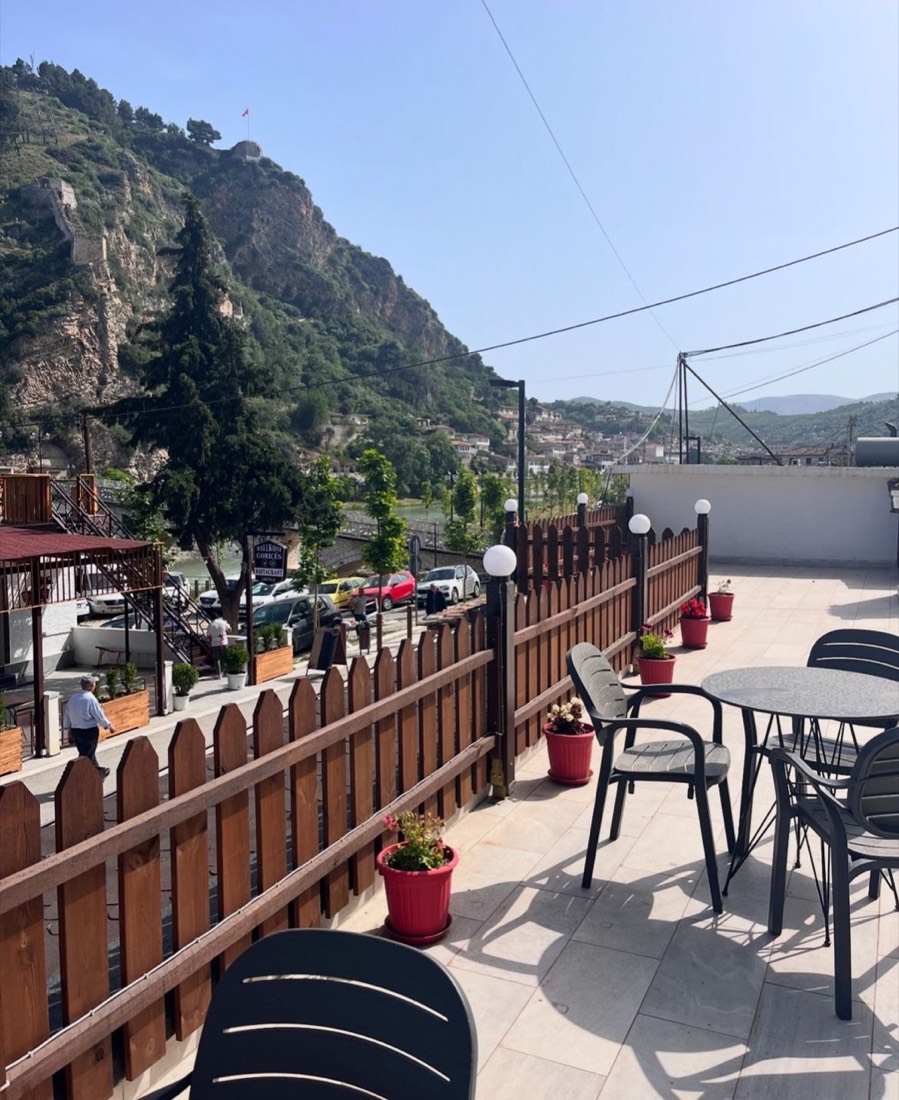
The first time you see Berat is from the road that arrives from Tirana, descending into the Osumi river valley. The two old quarters — Mangalemi on one bank, Gorica on the other — climb the slopes in tight rows of white Ottoman houses, every one of them with the same stacked rectangular windows facing the river. There are not literally a thousand of them, but the impression is strong enough that the nickname has stuck for centuries. Above it all is the castle hill, the dark walls of Berat Castle still wrapped around a small living town of stone houses, families and a handful of churches.
Berat is a quiet city of about thirty-five thousand people, and it does not particularly try to dazzle. It is the kind of place you walk slowly, eat well, drink a coffee at four in the afternoon and find that two hours have gone by. It is also a UNESCO World Heritage site — alongside Gjirokastër, one of the two best-preserved Ottoman urban landscapes in the Balkans — and the only place in Albania where you can spend the night inside the castle walls themselves. Two days here is the right amount: enough to walk all three quarters, climb to the castle for sunset, eat a slow lunch by the river, and leave wishing you had a third.
The three quarters
Berat is structured around three historical neighbourhoods, and the first thing to do is walk all of them.
Mangalemi is the most photographed quarter — the bank of stacked white houses below the castle on the north side of the Osumi. The main street, Bulevardi Republika, has the sights you see in every guidebook: the Sultan's Mosque (Xhamia e Mbretit) from the late fifteenth century, the Helveti Tekke behind it (an active Sufi prayer hall whose interior is genuinely beautiful — knock and you may be let in if no one is praying), the Halveti complex of small chapels. From here the lanes climb quickly toward the castle. Take any of them. Get lost. The houses are still lived in; people will say mirëmëngjes as you pass.
Gorica, across the river, is the smaller and quieter quarter. The Christian community of historical Berat lived here, and the white houses are arranged identically to Mangalemi but with a different tilt of light at sunset. Cross the Gorica Bridge — the long stone footbridge from 1780 that connects the two quarters — and walk the riverside lane. There are two or three small restaurants on the Gorica side that locals favour over the more touristed Mangalemi places.
The Castle (Kalaja) is the third quarter and the heart of the city. Walk up — the climb is twenty minutes from the river, slightly more in the heat — or take a taxi for €3–€4. Inside the walls, surprising for a fortress, is a complete small village: stone houses, a single café, a handful of churches, and the Onufri Museum in the former Cathedral of the Dormition. Onufri was the most famous Albanian icon painter of the sixteenth century; the museum holds his masterpieces and a serene collection of lesser-known iconostases. Spend an hour here.
From the castle ramparts, the views across the Osumi valley to Mount Tomorr and back down to the white-cliff houses below are the best in Berat. Sunset, predictably, is the time.
Two day trips worth taking
Mount Tomorr is the sacred mountain that dominates the eastern horizon — a national park with a Bektashi shrine at the summit and serious hiking. The full ascent is a long day trip with a 4×4 partway up; even the lower slopes have beautiful walking. In late August every year the Pilgrimage to Tomorr draws Bektashi Muslims from across the Balkans for a multi-day religious gathering — fascinating to witness, busy to be near.
The Osumi Canyons, an hour east, are one of Albania's natural showpieces — a dramatic limestone gorge cut by the Osumi river, with rafting available in spring (April–June) when the water is high. In summer the river drops too low for rafting but the walks above the gorge are still beautiful. Half-day tours from Berat run €30–€50 per person and include transport and a guide; doing it yourself by car is straightforward.
If you have time for a third, Apollonia, the Greco-Roman ruined city about an hour west, is one of the most underappreciated archaeological sites in Albania — fewer crowds than Butrint, just as much history, and a beautiful drive through olive country to get there.
Where to eat
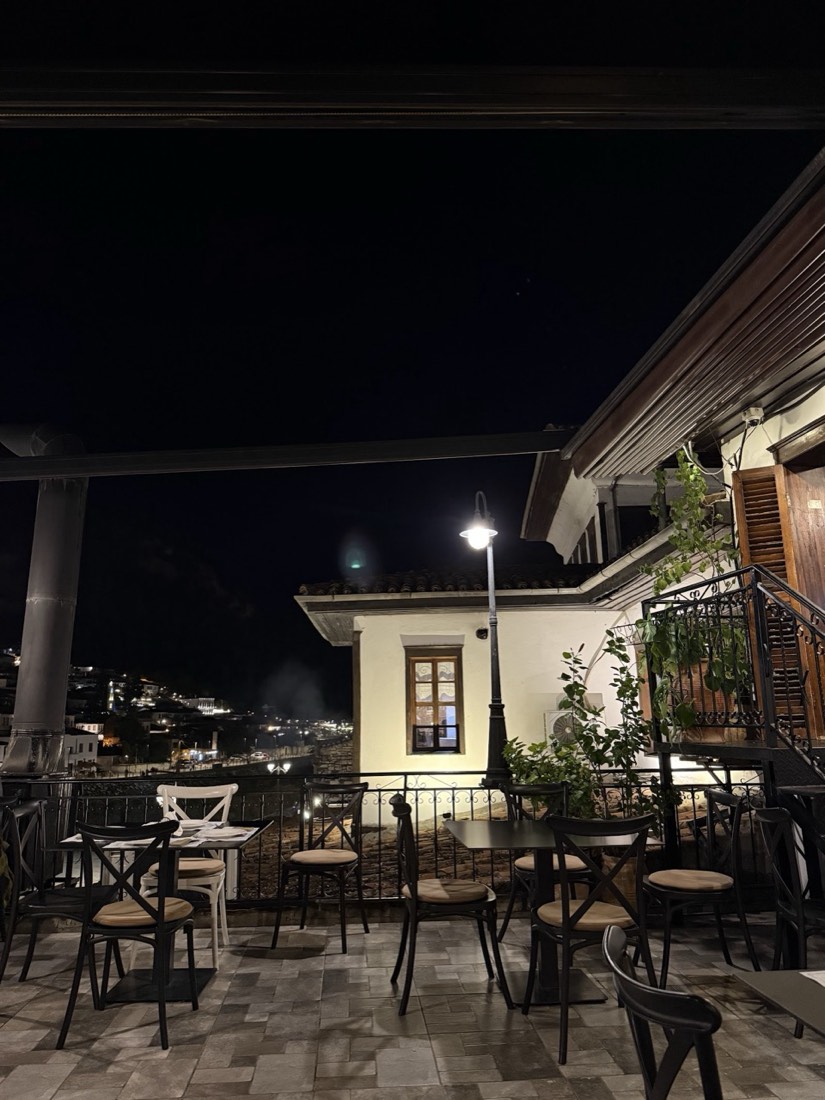
Berat eats well. Antigoni in Mangalemi, on the road that climbs from the river, is the local institution — tavë kosi, roast lamb, hand-rolled byrek, and a roof terrace that catches the breeze. Mangalemi Hotel Restaurant has a similar menu in a slightly more atmospheric setting; the fërgesë is excellent. Across the river, Restaurant Liria in Gorica is quieter and serves the kind of slow, family-run lunch that you remember for weeks.
For breakfast, walk into any of the small bakeries on the main bulevard for byrek me djathë (cheese pie) or byrek me spinaq (spinach). Cost: €0.50–€1. Wash down with coffee at a sidewalk table.
The local wine deserves a mention: Berat is one of Albania's main wine regions, and the local Pula and Çobo wineries (you can visit either) produce clean, drinkable reds and whites that pair perfectly with a Berat lamb dinner. Ask for a glass of local instead of the standard imported table wine.
Where to stay
The defining experience of Berat is sleeping inside the castle. There are around a dozen guesthouses operating inside the medieval walls, in restored stone houses that still belong to the families who lived there. Hotel Klea and Hotel Onufri are the long-running classics; expect rooms from €40 a night in shoulder season, €60–€90 in summer, and a hearty breakfast on a stone terrace. The catch: you cannot drive in. You park outside the castle and walk in (the climb with luggage is less fun). Many guesthouses will help carry bags.
If you prefer the convenience of being able to drive to your door and walk to dinner without a hill, the streets of Mangalemi just below the castle have several boutique hotels in restored Ottoman houses (similar prices) — the Mangalemi Hotel is the best known. Gorica is the quietest and least touristed; a guesthouse on this side of the river is the right call if you want stillness.
When to come
Berat is enjoyable nearly year-round, but the sweet spots are April–June and September–October. Summer (mid-July through August) is hot — over 35°C is normal — and the white walls amplify the heat. Spring brings the wildflowers on Mount Tomorr; autumn brings the wine harvest and the perfect walking temperatures. Winter is cold and quiet but undeniably atmospheric, especially after a rare snowfall on the castle.
The major local festival is the August Tomorr pilgrimage; if you are in town then, the city is busy with religious tourism but also alive in a way it is not the rest of the year.
Getting in and out
Berat is two and a half hours by car or bus from Tirana, three hours from Sarandë via the inland road. Direct buses run several times daily from both directions; cost is €5–€10 each way and the trip is comfortable on the modern coaches. From Tirana International Airport, the easiest route is to overnight in Tirana first and bus the next morning.
Inside the city, walking handles everything. Taxis are cheap (€2–€5 across town) and the furgon minibuses connect to the surrounding villages for €1–€2.
Practical bits
Cash is widely used; cards are accepted in most central restaurants and hotels. ATMs are available downtown but the castle quarter has none. Tipping is appreciated — round up or 10%. The town is safe; the genuine risks are heat in midsummer (drink water) and the cobblestones (wear real shoes, not sandals, especially climbing to the castle).
Wi-Fi is everywhere. Mobile data is cheap; a tourist SIM with a couple of weeks of data costs €5–€10.
A final note
Berat is the place in Albania where you slow down. Tirana is loud and the Riviera is bright; Berat is quiet and beautiful and run on its own clock. People who come here for one night routinely stay two. The best version of the trip is to arrive in the late afternoon, drop your bag, walk to the castle for sunset, eat a long dinner on a stone terrace, and spend the next day doing exactly the same things again at a slightly slower pace. That, more than any list of monuments, is what Berat does best.