
Gjirokastër — a complete guide to Albania's stone city
Gjirokastër is the stone city — a UNESCO Ottoman town carved into the side of a mountain, with a giant fortress on top and a Cold War bunker tunnel beneath it. Here's how to spend two days here properly.
 Tony Denesa·Senior Travel EditorApril 3, 2026· 9 min
A city built from a single quarry
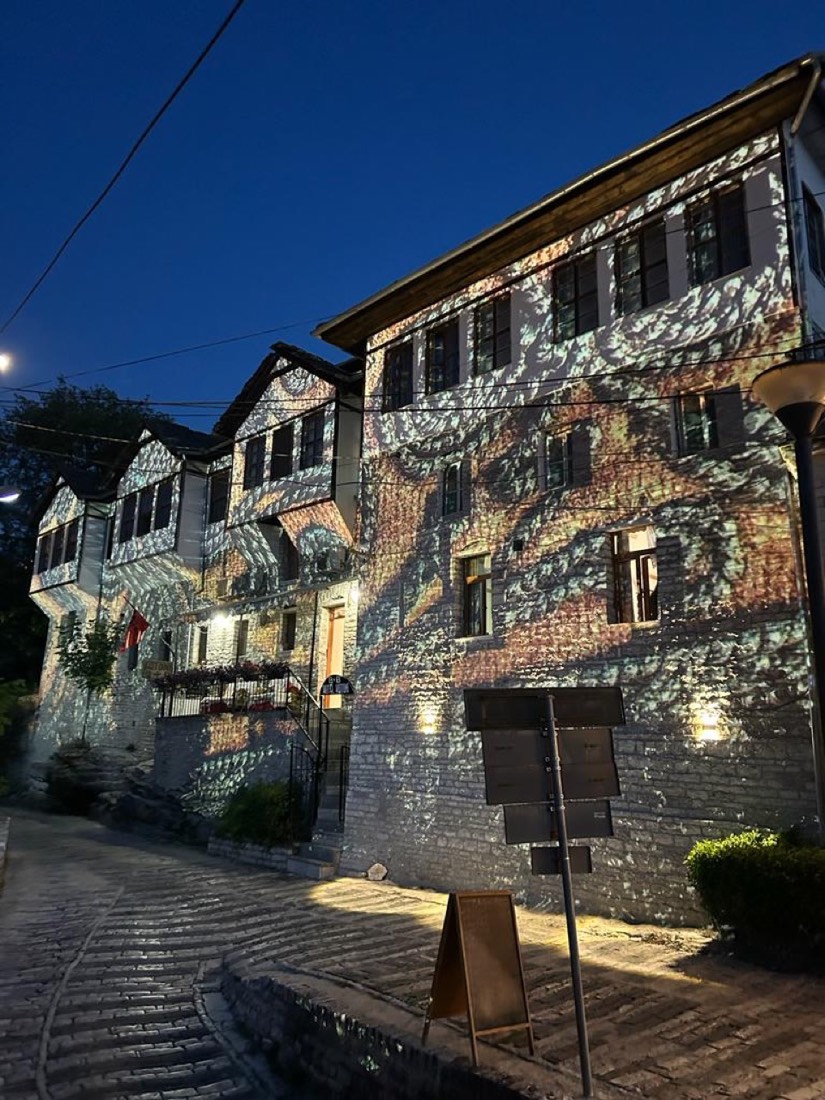
The first thing you notice about Gjirokastër is that everything is grey. Not concrete grey — the soft, mottled grey of slate and limestone, the local stone of the Drin valley, that has been used for every roof, every wall, every staircase, every cobble in the old town for four centuries. From the right angle, in the right light, the entire city looks like a single object carved out of the mountain itself.
This is the stone city, qyteti i gurtë, the UNESCO Ottoman town that produced both the dictator Enver Hoxha (born here in 1908) and the Nobel-shortlisted novelist Ismail Kadare (born here in 1936) — neighbours, more or less, on the same hillside. It is also the seat of the largest castle in the Balkans, a vast military complex on the cliff above town that has been a fortress, a prison and now a museum. Gjirokastër packs more strange and interesting history per square kilometre than almost anywhere else in Albania, and it is gloriously easy to explore on foot.
Two days here is about right. One is too rushed; three starts to feel slow. Here is how to spend them.
The Old Bazaar and the climb to the castle
The Old Bazaar (Pazari i Vjetër) is where you start. The cobbled main street fans out from a small central square at the top of the historic core, lined with restored Ottoman shops that today sell everything from genuine qilim rugs and embroidered linens to mass-produced fridge magnets. Walk slowly. The shops at the upper end are run by old craftsmen and are worth the time; the ones near the parking are tourist-grade.
From the square the road climbs five minutes to Gjirokastër Castle (Kalaja), the dominant feature of the city. The walls are vast — fifteenth-century in their current form but with foundations going much further back — and the interior is structured as a museum. The Armament Museum, in the old artillery hall, is genuinely interesting: tanks, rifles, an actual American spy plane shot down in 1957 (a U.S. T-33 that was forced to land at Tirana airport and was given a permanent home here as a propaganda trophy). There is also a National Folk Festival amphitheatre at the back of the castle that hosts a major folk-music festival every five years; in non-festival years it is empty and beautiful.
Climb to the castle's clock tower. The view of the Drin valley and the white roofs of the city descending from the castle walls is the postcard photograph of Gjirokastër.
The Cold War tunnel
Directly below the castle, hidden in the rock, is the Cold War Tunnel — a complete underground command bunker built by the Hoxha regime in the 1970s in case of nuclear war. It is one of the most haunting things you can do in Albania. The tour takes about an hour and walks you through the meeting rooms, sleeping quarters, communications centre and command room, all preserved with their original 1970s furniture and equipment. The guide explains how the tunnel was kept entirely secret from the city above and how it was prepared to house the regional Communist Party leadership for weeks.
The entrance is through an unmarked door at the foot of the castle. Tickets are bought at the castle. Take a light jacket — the temperature inside is constant 14°C year-round.
The Ottoman houses
Gjirokastër has hundreds of three- and four-storey Ottoman tower-houses (kullë) on the hillsides surrounding the bazaar. Two of them are open as museums, and you should visit both.
The Skenduli House (Shtëpia Skenduli) is the more atmospheric of the two — a privately-owned, family-restored kullë that the elderly owner himself takes you through, room by room, explaining the function of every space. The wooden ceilings, the painted niches, the secret cupboards for hiding valuables during Ottoman tax inspections, the chimney room where the men of the house drank coffee. Allow ninety minutes. He speaks excellent English and Italian.
The Zekate House (Shtëpia e Zekateve) is grander, less personal, more architecturally pristine. It sits at the top of the climb above the bazaar — the walk up is steep — and the views from the upper rooms are exceptional. The painted reception room on the top floor is one of the finest surviving Ottoman interiors in the Balkans.
If you have time for a third, the Ethnographic Museum is housed in the building where Enver Hoxha was born and reconstructed after a fire in 1916; the displays are modest but the building itself, complete with its original kitchen and women's quarters, is worth the entry fee.
Where to eat
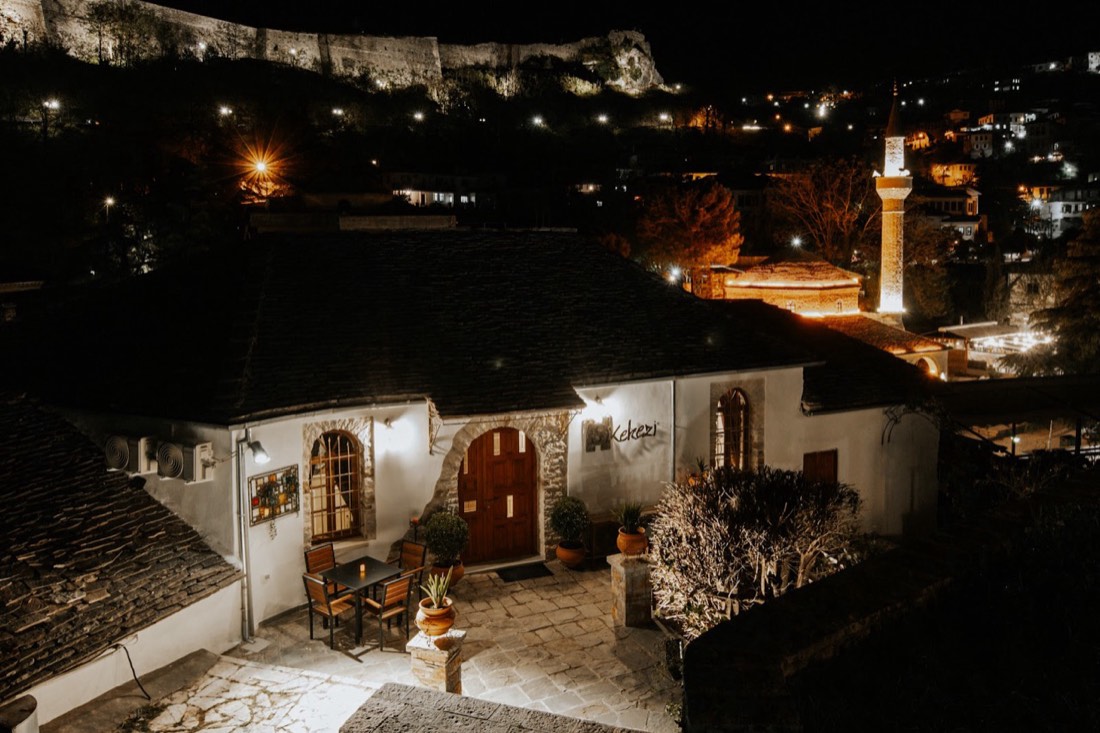
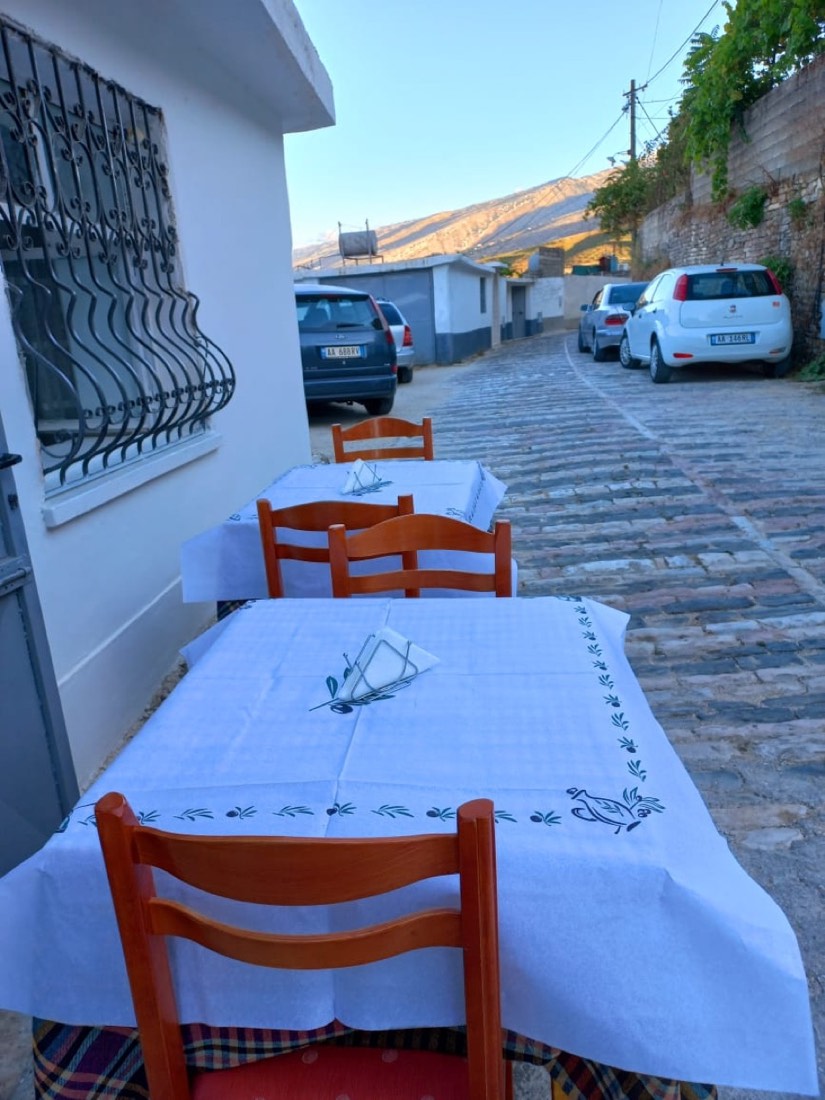
Gjirokastër has a small but excellent restaurant scene built around traditional southern Albanian cuisine. Taverna Tradicionale Kuka is the long-running classic — a stone-walled cellar a few steps off the bazaar where the qifqi (a Gjirokastër speciality of fried rice balls) and the paça (a slow-cooked tripe soup that is much better than it sounds) are the things to order. Odaja is a slightly more polished version of the same idea — modern presentation, classic recipes, good wine list, slightly higher prices.
For a casual lunch, the small byrek shops along the bazaar serve fresh hand-rolled pies for €0.50–€1; the cheese version with the local djathë i bardhë is what you want. Coffee is everywhere and uniformly good for €1.
The local raki — distilled from grapes or, occasionally, from local mountain herbs — is offered everywhere as a digestif and is genuinely worth trying. Sip, do not drink.
Where to stay
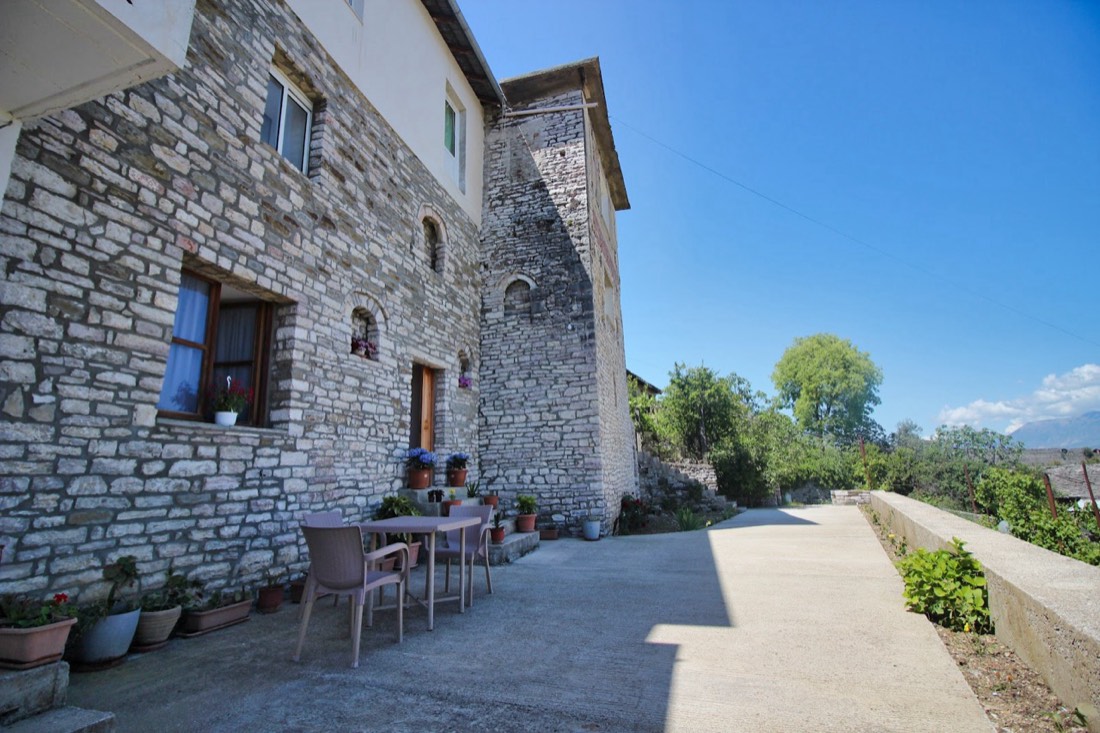
The rule is simple: stay in a restored stone house in the old town. There are around a dozen of these — small family-run guesthouses in the kullë style, with thick walls, stone staircases, and breakfast served on a terrace looking down at the white roofs of the city. Stone City Hostel is the budget pick (private rooms from €25); Hotel Gjirokastra and Hashorva Guest House are the mid-range classics (€40–€70); Hotel Çajupi is the polished pick at the upper end. Outside the old town there are cheaper hotels, but you will spend half an hour walking back to dinner.
The historic streets are steep and cobbled. If mobility is a concern, choose a guesthouse closer to the bazaar rather than higher up the hill — and accept that almost every door in the old town is reached by stone steps.
Day trips and the south
Gjirokastër works as a base for two important nearby places.
The Blue Eye (Syri i Kaltër) is forty-five minutes south by car — the freshwater spring of impossibly cold turquoise water that draws crowds from Sarandë every summer. From Gjirokastër the road is easy and the morning crowd is much smaller than the afternoon one.
Përmet is an hour and a half north — a small town on the Vjosa river known for slow food, raki distilleries, and the natural thermal baths at Bënjë, where you can soak in clear hot pools beneath an Ottoman bridge surrounded by mountains. It is one of the loveliest day trips in southern Albania.
If you are continuing south, Gjirokastër is two hours by road from Sarandë and a natural stop on the Tirana–Riviera route.
When to come
Gjirokastër is at its best in April–June and September–October. Summer is hot — the stone holds heat — and the city's elevation (about 300m) does not help as much as you might hope. The October light on the slate roofs is one of the prettiest things in the country. Winter is cold and quiet but undeniably atmospheric, especially with snow on the mountains across the valley. The major event is the National Folk Festival every five years (the next is 2028) — if you can be in town during it, the city is transformed; otherwise it is a quiet UNESCO town getting on with itself.
Getting in and out
Gjirokastër is on the main road from Tirana to Sarandë and very well connected. Direct buses from Tirana take about four hours and cost €10–€15; from Sarandë it is two hours and €5–€8. Drivers will find paved roads the whole way and the climb up into Gjirokastër is dramatic — the new town is at the bottom of the hill and the historic centre is up a steep, narrow access road. There are two car parks in the old town; both fill in summer.
If you are arriving via the Greek border at Kakavija, Gjirokastër is the first major Albanian town and a natural overnight stop.
Inside the old town, you walk. Taxis are €2–€5 across the new town and €5–€8 from the new town up to the historic centre.
Practical bits
Cash is widely used; cards are accepted in restaurants and most guesthouses but rarely in the bazaar shops. ATMs are in the new town below the historic centre. Tipping is appreciated but not expected.
Wear real shoes. The cobbles are slick after rain and the slopes are no joke. Bring a light jacket even in summer — evening temperatures up at the castle drop quickly. Wi-Fi is everywhere; mobile data is cheap.
The town is safe. The genuine risks are the cobbles (twisted ankles are a thing) and getting lost in the maze of stone alleys above the bazaar — which is also part of the experience.
A final note
Gjirokastër is a city that does not have to try. The setting — the stone, the slope, the castle on top — does the work for it. What it adds, on top of the architecture, is one of the most concentrated histories in Albania: an Ottoman past visible in every house, a communist past preserved in the underground tunnel, a literary past you can walk through on the streets where Kadare grew up. Two days here, taken slowly, will give you a clearer sense of what southern Albania actually is than a week on the beaches below ever could. It is the place to come when you are ready for Albania's deeper layers.